
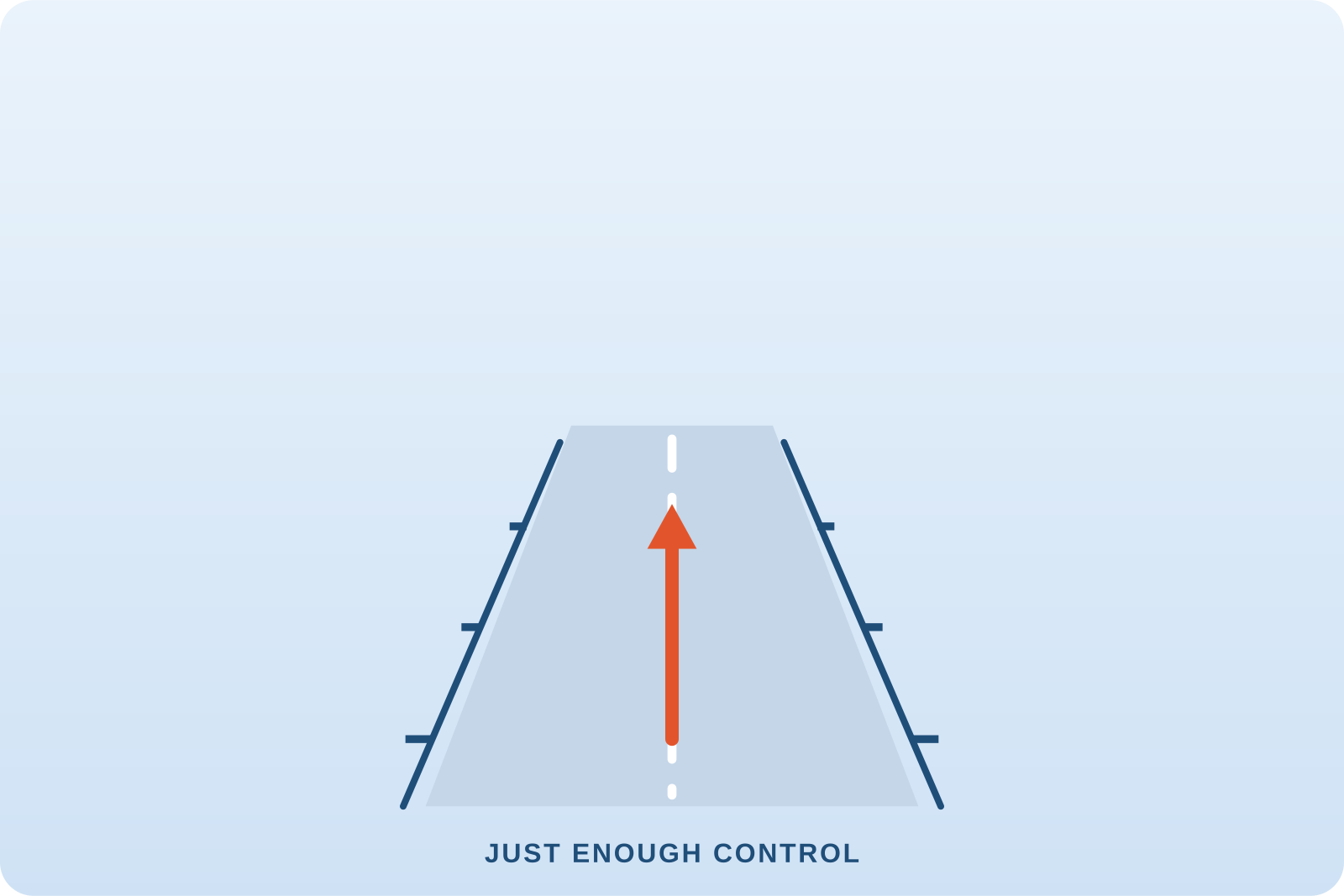
Governance has an image problem. To many people it means forms, committees and delay — the brakes on getting things done. Done well, it’s the opposite: the guardrails that let you move quickly because you know where the edges are.
When governance becomes bureaucracy
Bureaucracy creeps in when control is added for its own sake — a sign-off with no real decision behind it, a policy nobody reads, a committee that meets because it always has. Each feels prudent in isolation; together they slow everything and teach people to work around the rules rather than with them.
Designing “just enough”
Fit-for-purpose governance starts from risk, not habit. A few principles help:
- Match control to risk — heavy scrutiny for high-stakes decisions, a light touch for reversible ones.
- One clear owner — every decision has someone accountable, not a committee to hide in.
- Make the right thing easy — good defaults and templates beat long approval chains.
- Review the rules — retire controls that no longer earn their keep.
The pragmatic takeaway
The goal isn’t more control or less — it’s the right amount in the right places. Good governance should feel like guardrails on a fast road, not roadblocks across it.