
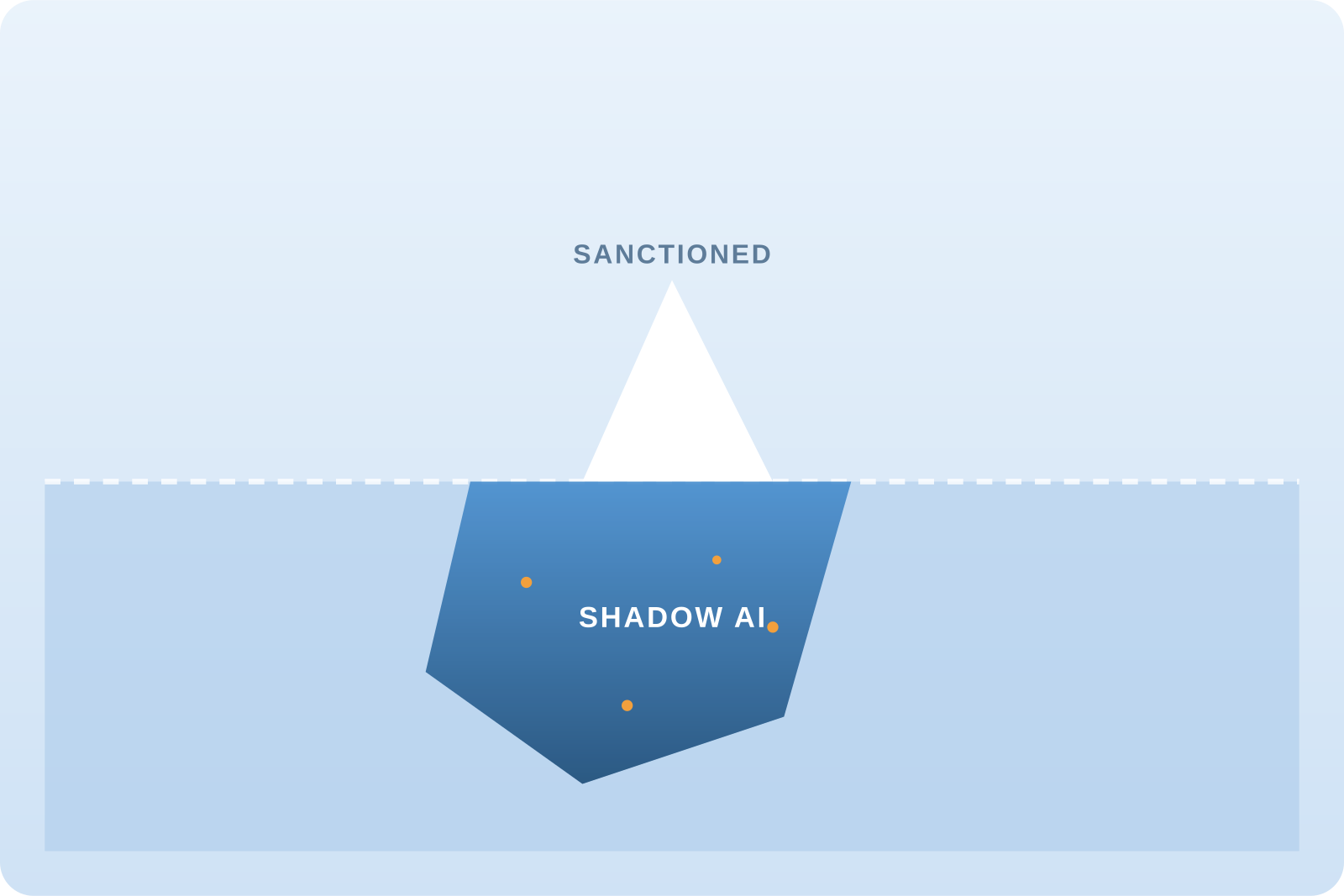
Here’s an uncomfortable truth for most organisations: your people are already using AI. Not the sanctioned, carefully-governed kind — the free tools open in a browser tab, helping them write, summarise and analyse. “Shadow AI” is already here, whether or not anyone approved it.
Why banning it doesn’t work
The instinct is to lock it down. But a blanket ban rarely stops use; it just pushes it further out of sight, onto personal devices and accounts where you have no visibility at all. Worse, you lose the upside — people are finding genuine gains you’d want to learn from. The risk isn’t that staff use AI; it’s that they use it without guidance.
A more useful response
Treat it as something to enable safely, not eliminate:
- Give clear guidance — what’s fine to put into a tool, and what absolutely isn’t (client data, personal information, secrets).
- Offer a sanctioned option — people reach for shadow tools when nothing official exists.
- Make the rules practical — short, plain-language and easy to follow.
- Learn from usage — the workarounds show you where the real demand is.
The pragmatic takeaway
Shadow AI is a signal, not just a risk. Meet it with sensible guardrails and a real alternative, and you turn an unmanaged exposure into a managed advantage.