
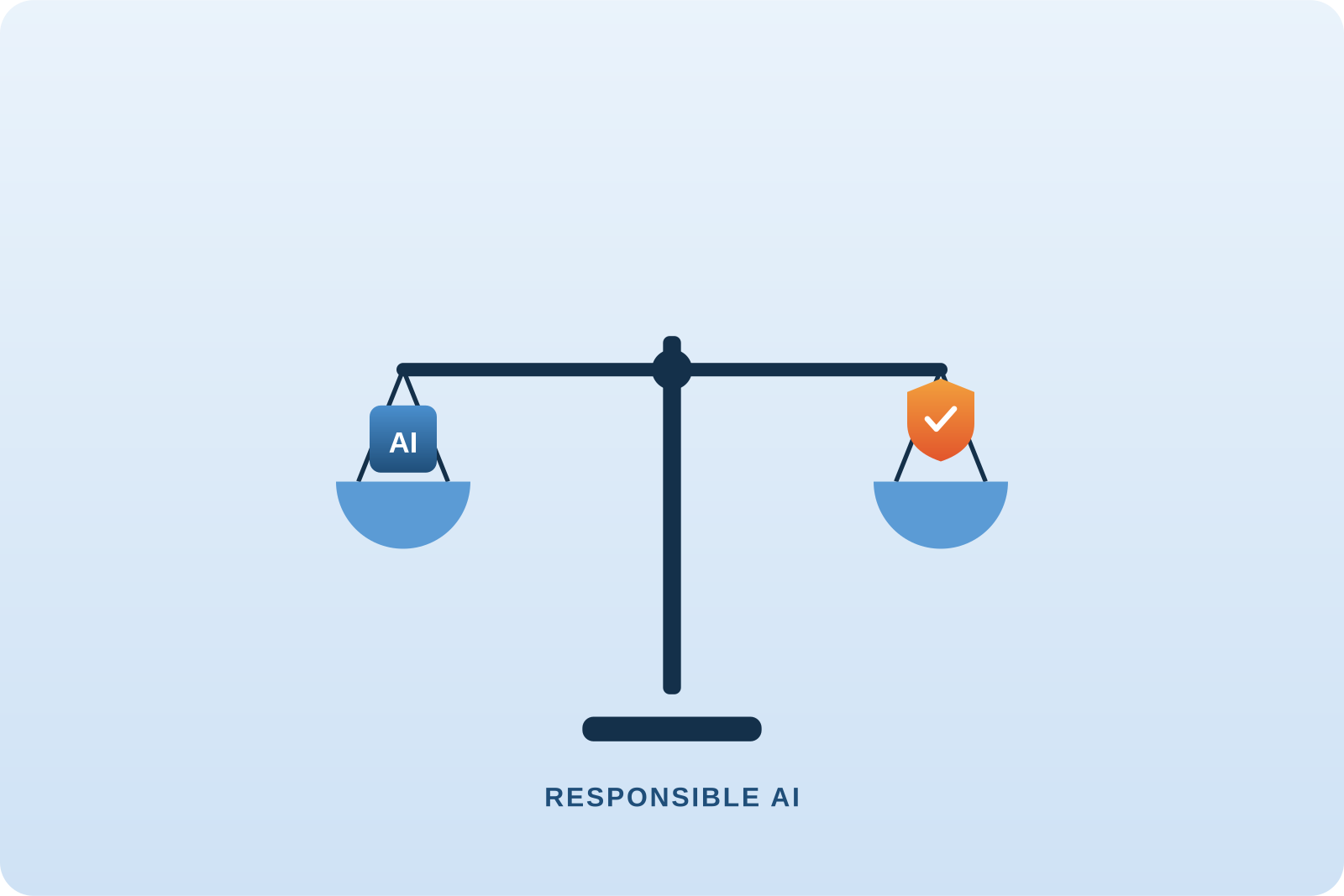
“Responsible AI” can sound like a values exercise — important, but soft, and easy to defer. In practice it’s something more concrete and more urgent: ordinary risk management, applied to a powerful new tool.
The real risks are practical
The exposures aren’t abstract. An AI system trained on biased data can make unfair decisions at scale. A model fed sensitive information can leak it. A confident, wrong output acted on without review can cause real damage. These are operational, legal and reputational risks — the same categories you already manage everywhere else, just with new triggers.
Managing it like any other risk
That reframing makes it tractable:
- Know where AI is used — you can’t manage exposure you can’t see.
- Keep humans on high-stakes calls — match oversight to consequence.
- Protect the data — the same controls you apply to any sensitive information.
- Be able to explain decisions — especially where they affect people.
The pragmatic takeaway
Responsible AI isn’t a separate ethics project bolted on at the end. It’s good risk management woven into how you adopt the technology — and it’s what lets you move quickly with confidence rather than crossing your fingers.