
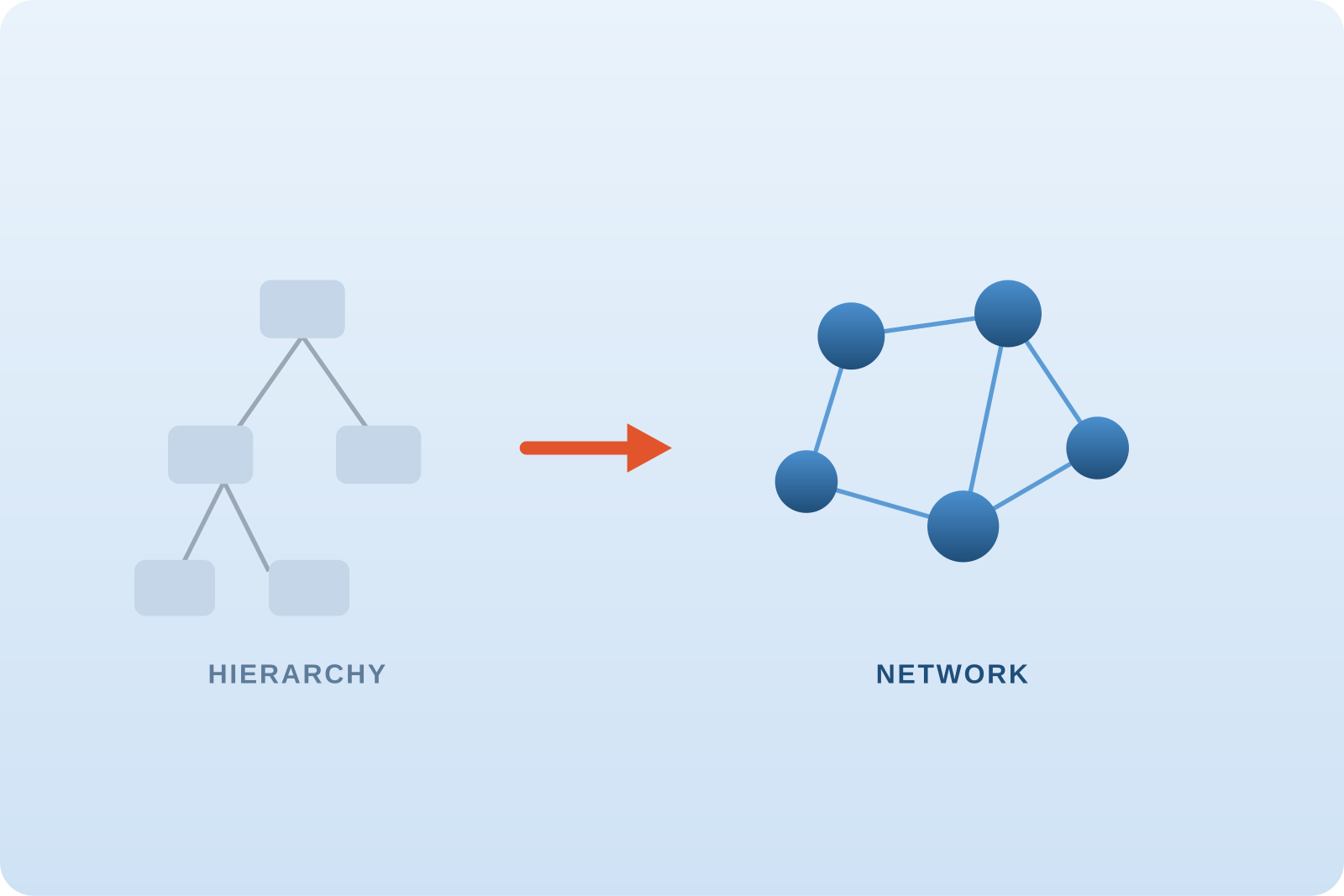
As AI moves from experiment to everyday tool, the question shifts from “what can the technology do?” to “how should we organise around it?” The answer rarely fits the org chart you already have.
What actually changes
AI doesn’t just automate tasks; it redraws where decisions are made and who makes them. Work that once moved up a hierarchy for sign-off can be handled at the edge, with AI doing the first pass. Roles blur between the people who do the work and the people who design and supervise the systems that help them. If the operating model stays the same, you simply get faster cul-de-sacs — quicker work feeding the same slow approvals.
Designing for a post-AI organisation
A few shifts tend to matter most:
- Decision rights — be explicit about what AI can decide, what it only recommends, and what still needs a human.
- New roles — someone has to own data, monitor model behaviour and handle exceptions; these are real jobs, not afterthoughts.
- Team shape — cross-functional teams that pair domain experts with people who understand the tools.
- Performance measures — reward outcomes and good judgement, not just the volume an AI can now inflate.
The pragmatic takeaway
Technology change without operating-model change just makes the existing system run faster. Before scaling AI, ask how decisions, roles and accountability should move — then let the structure follow the work, not the other way around.