
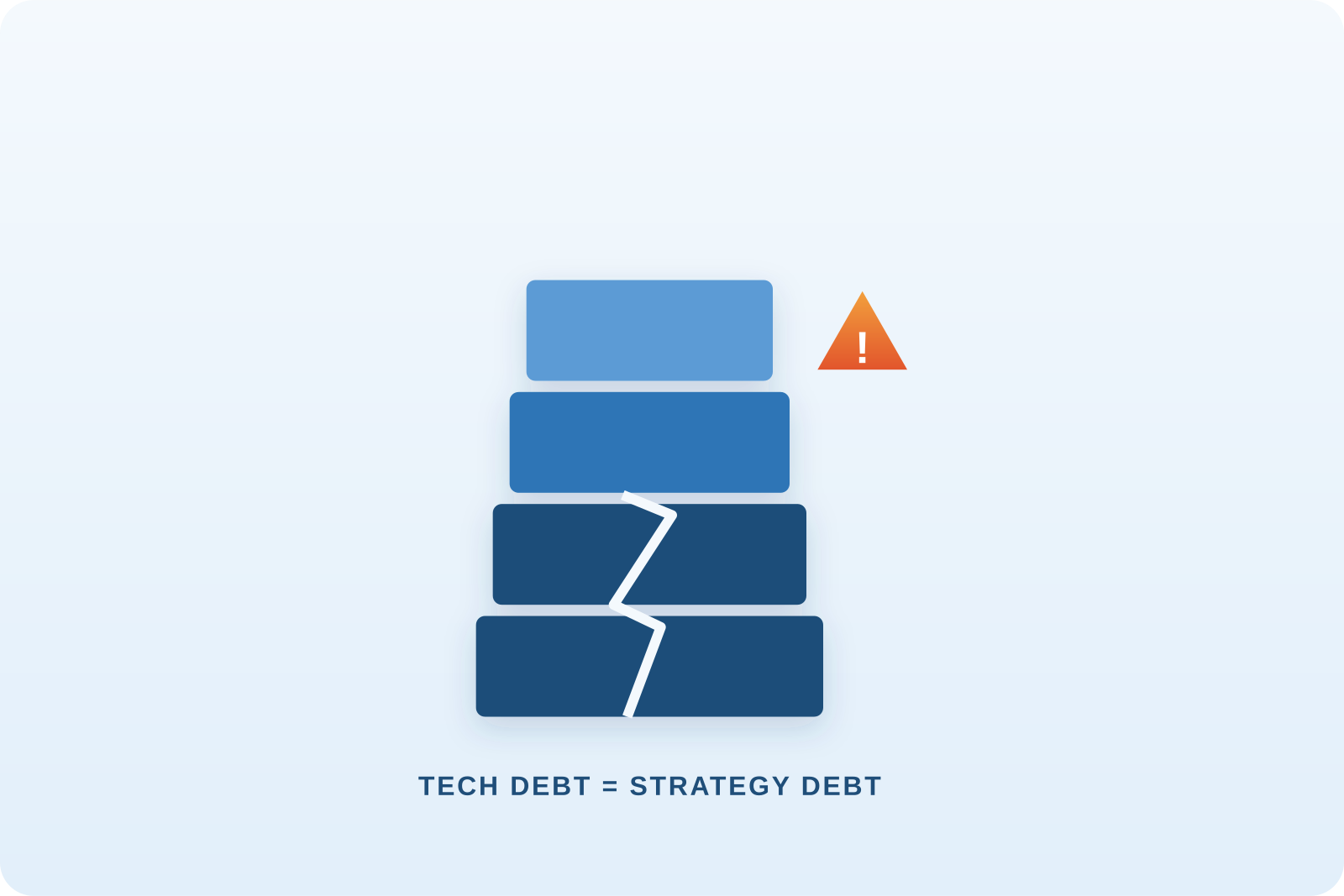
“Technical debt” sounds like an engineering problem — something for the IT team to worry about. But left unaddressed, it quietly becomes a business problem, constraining what the organisation can do long before anyone connects the dots.
How debt becomes a ceiling
Every shortcut, ageing system and undocumented workaround is borrowed time — convenient now, costly later. Individually they’re tolerable. Collectively they harden into a ceiling: changes take longer, integrations break, and “simple” requests turn into months of work. Eventually the technology stops enabling the strategy and starts dictating it — you can only do what the systems allow.
Treating it as a strategic issue
That reframing changes who should care, and how:
- Make it visible — name the debt and its business impact, not just the technical detail.
- Budget for it — deliberate, ongoing paydown, not a heroic one-off.
- Tie it to ambition — fix the debt that blocks where you’re trying to go.
- Stop adding blindly — borrow consciously, and write it down.
The pragmatic takeaway
Technical debt is strategy debt with a delay. Manage it as a business risk, not just an engineering chore, and you keep the freedom to act when it matters most.